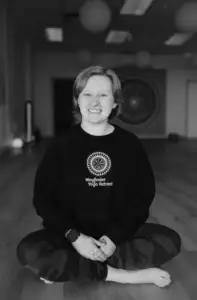

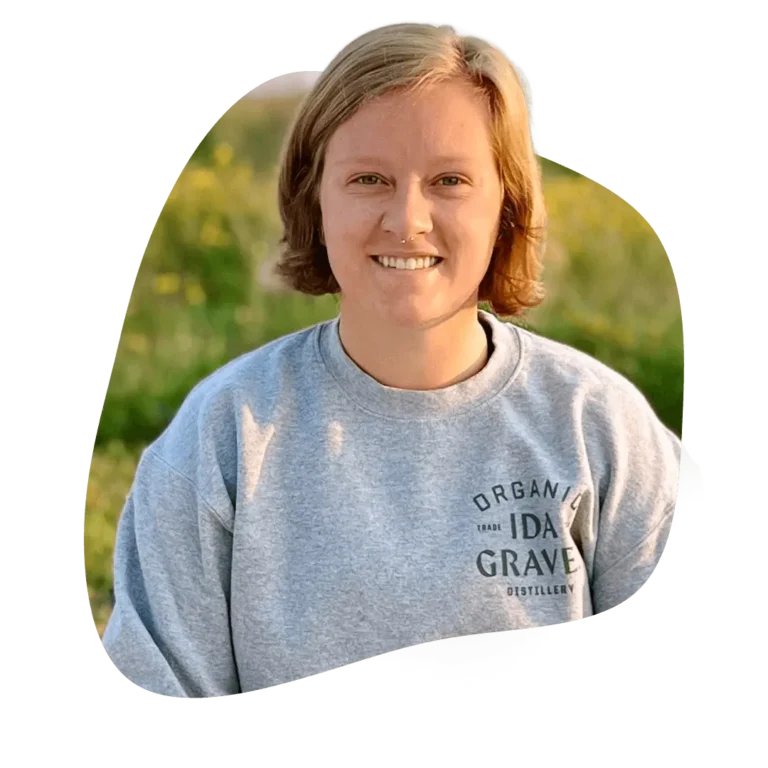
We sat down with Brynne to talk about the things that shape the way they show up as a therapist. Our conversation wandered through couples therapy, autism, meaning-making, identity, communication, and the expansive possibilities that emerge when people begin questioning the stories they’ve always been handed.
Authored by Jakkie DeCorsey, MSW LICSW
One of my favorite things about interviewing our clinicians is that I never quite know where the conversation is going to go. Sometimes the conversations feel like they match the twists and turns of a rollercoaster, and sometimes they match the energy of a mountain hike; slow, steady, amazing finds along the way that spark all sorts of creativity, energy and insight. My most recent conversation with Brynne was much more like those two experiences mixed together.
With Brynne last week, over a cup of pomegranate iced tea, we started by talking about first impressions. And we landed in the space where connections between autism, meaning-making, couples therapy, sexuality, grief, systems, and the reasons why she genuinely lights up when people realize they have more choices than they thought, all collided and conferred.
Which, honestly, feels very Brynne.
One thing Brynne shared that has stuck with me since meeting them was that people sometimes assume they’re incredibly confident or rigid when they first meet.
Their response surprised me. It was encapsulated in a laugh, followed by the idea that people often don’t see just how much thinking has happened before they say anything at all. “I don’t usually speak unless I’ve done a lot of research or spent a lot of time thinking about it,” Brynne explained. “But what I really want is for people to bring me more information.”
That deep well of curiosity showed up over and over again throughout our conversation. The well of curiosity imbued by genuine fascination with how other people make meaning of the world.
When I asked what drew Brynne to couples therapy, their face completely lit up. “I love relationship work”. We uncovered that this isn’t because conflict is a complete joy to work within each day, but rather because they love watching two people begin to truly understand each other.
They talked about how every person develops their own way of making sense of the world; their own experiences, assumptions, beliefs, and stories. And that most couples aren’t actually arguing about the dishes or the vacation or intimacy. They’re speaking from two entirely different meaning-making systems without even realizing it.
Brynne’s work is helping people slow down enough to become curious about each other’s worlds. And sometimes it’s the first time they’ve really seen each other in years.
One of the themes that kept returning throughout our conversation was the concept of expansion. Whether we were talking about relationships, identity, intimacy, or healing, Brynne kept coming back to the same idea:
What if there were more possibilities than we’ve been taught?
They described much of therapy as helping people recognize that many of the “rules” they’ve been living by were never actually theirs to begin with. “They’re often things we’ve absorbed from our families, our culture, or society”. And that when clients are able to explore this further, the gender roles and norms that have followed them from various childhood spaces start to feel more apparent too. Brynne’s self-disclosed favorite moments are watching clients discover that they get to decide what fits for them, outside of what they’ve been taught to embody by others.
Because there’s literally not just one right way. There’s a magnitude of options at everyone’s fingertips.
When we talked about couples therapy, Brynne shared one sentence they wished more people could say to each other. Instead of hearing, “You hurt me” as criticism…
What if we could respond with:
“Thank you for telling me. Now I can do something about it.”
It sounds simple, doesn’t it? So purely simple and solid to stand on. But, I’ll have to warn you, underneath it is an entirely different way of relating. One rooted in curiosity instead of defensiveness.
Which is what Brynne sees shift each and every time a couple begins to use some rendition of this phrase. Although this change doesn’t mean that they suddenly stop hurting each other, far from it actually. Relationships of all types include mishaps, dense emotions, misunderstandings, and pain… we’re humans after all. Rather, when this shift happens, what couples experience is an understanding that feedback isn’t an attack. There’s a usefulness and function in hearing and understanding what your partner is trying to hand you about what they’re experiencing.
This simple sentence is an invitation to know one another more deeply.
Near the end of our conversation, I asked Brynne what excites them most for clients to experience at Northern Edge Counseling. Their answer felt like it captured everything we’d been talking about in between two rock-solid bookends:
“I hope they experience how expansive it is to be human.”
Expansive. The ability to become more fully themselves. To question old assumptions. To discover new ways of feeling connected to the people they love most. To realize there may be far more possibilities available than they ever imagined.
And after spending an hour talking with Brynne…
I have a feeling that’s exactly what it feels like to sit across from them in therapy.
📖 Next on the nightstand: Decolonizing Therapy, Dr Jennifer Mullan
☕ Coffee Order: Cappaccino
🌲 Favorite Way to Spend a Saturday: “Rest. We love the rest”. Brynne also reserves Saturdays to be with the people they love.
💛 Therapeutic Superpower: Gently Challenge What You Think.
🚫 Absolutely Not: Arguing with someone/anyone. Hard boundary around not trying to convince another person of anything.